ZD Skin Solution
Start Your Project
ZD Skin Solution
A source-backed 2026–2027 EU, US and UK cosmetics regulation guide for skincare brands, covering MoCRA, claims, microplastics, notifications and OEM/ODM launch readiness.



Regulation is now a product-development input, not a final packaging check. A formula that is commercially attractive can still miss its launch window if the responsible person, safety file, notification, claim substantiation, packaging evidence or facility records are not planned early.
This watch covers the EU, United States and Great Britain—the three systems most likely to shape an international skincare brief. It is a practical planning guide, not legal advice; final market entry needs review by the responsible local regulatory team.
Original visual: a cosmetics compliance and formulation-development concept.
The same serum can require different operational evidence in the EU, US and UK. Ingredient selection affects safety assessment and substantiation; packaging affects labels and stability; promotional copy determines whether a product remains in cosmetic territory. The practical answer is a market-entry brief prepared at concept stage, not after mass production.
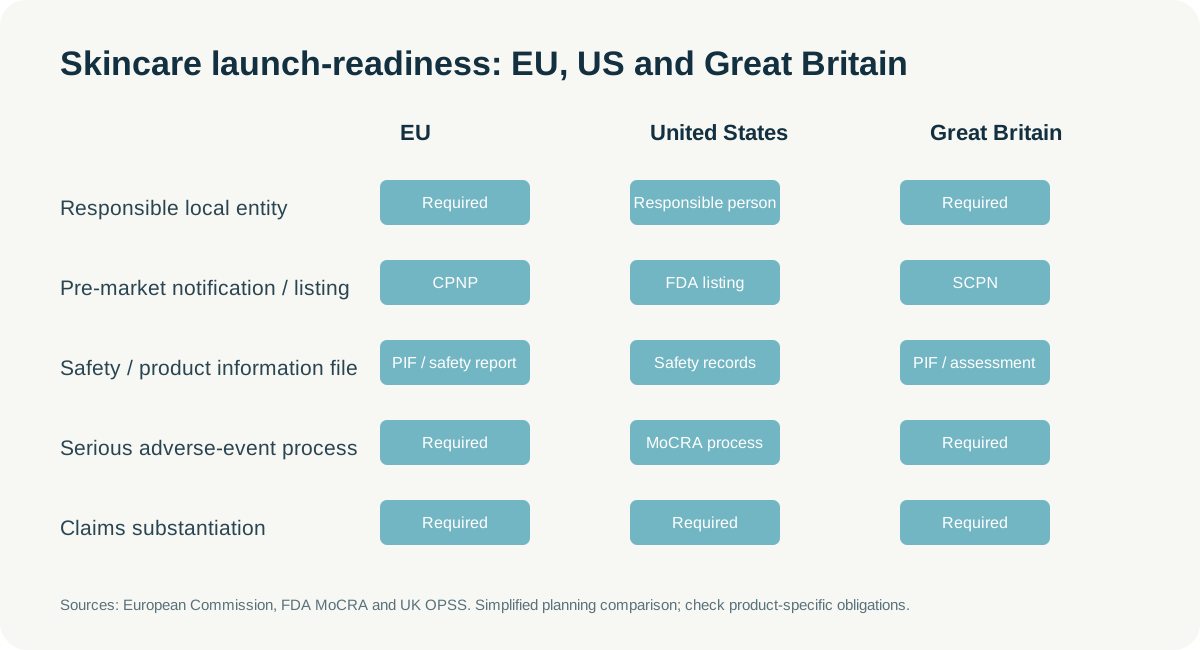
The EU system centres on a Responsible Person, product safety report/PIF and CPNP notification. EU claims may not imply characteristics or functions the product does not have, and the Commission provides common criteria for claim justification. EU cosmetics legislation
In the US, MoCRA requires manufacturers/processors to register facilities and renew every two years, while responsible persons list marketed cosmetic products and update information annually. It also requires serious adverse-event reporting and recordkeeping; defined small-business exemptions exist. FDA MoCRA
For Great Britain, the UK Responsible Person must ensure safety, maintain a PIF, notify via SCPN before market availability and support product claims. GOV.UK
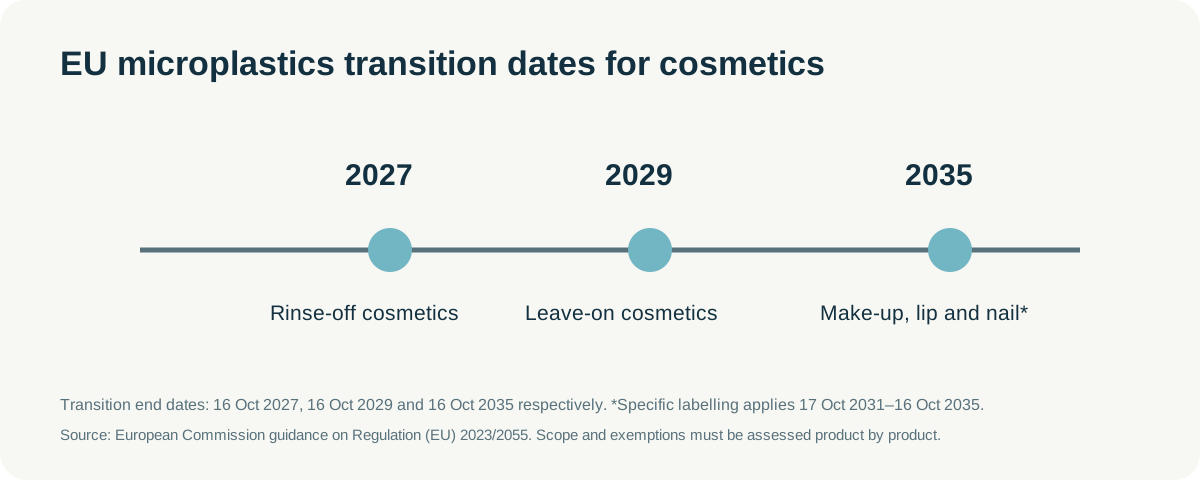
The restriction applies to synthetic polymer microparticles and has category-specific transition periods. This should trigger a bill-of-materials review, supplier declarations, reformulation timeline and claim/label review now—not in the final month before a deadline.
| Better cosmetic territory | High-risk wording without a separate basis |
|---|---|
| Helps skin look hydrated, radiant or smoother | Treats acne, eczema, inflammation or hyperpigmentation disorders |
| Supports a comfortable-feeling skin barrier routine | Repairs DNA, regenerates cells or heals tissue |
| Improves the appearance of fine lines when supported by testing | Reverses ageing or replaces injectables/laser procedures |
| “Clinically tested” with the scope and product clearly identified | “Clinically proven” without relevant finished-product evidence |
This table does not replace claim review. It shows why ingredients such as exosomes, PDRN, peptides, acids and NAD+ need a formula-specific evidence package and restrained copy.
Build one evidence core, then localise the requirements around it. The central file should include INCI and supplier documentation, formula specifications, stability and compatibility results, safety evidence, manufacturing records, label copy, claim substantiation and adverse-event contact route. The EU/UK responsible-person and notification work, US facility/product obligations and local advertising review should then be planned in parallel.
For a compliance-oriented development brief, brands can review ZD Cosmetic Ingredients, the Ingredient Library and OEM/ODM service.
The most resilient product-development plan treats compliance as a design constraint that improves launch quality. EU, US and UK rules do not demand the same records, but all reward clear ingredients, accurate labels, substantiated cosmetic claims and traceable safety processes. Start those decisions while the formula is still flexible.
To discuss a target market, formula direction and claim plan, contact the ZD team.
Scope note: This article summarises public regulatory guidance for product-planning purposes. It does not replace jurisdiction-specific legal, safety-assessor or Responsible Person advice.