ZD Skin Solution
Start Your Project
ZD Skin Solution
A source-backed guide to exosome skincare in 2026, covering the evidence gap, global commercial signals, claims boundaries, product formats and OEM/ODM development priorities.


Exosome skincare has become one of beauty’s most visible high-science narratives. It is appearing in prestige DTC serums, clinic-adjacent brands and Korean innovation stories, while social content often blends topical cosmetics with professional procedures, microneedling and injectable products. That overlap creates attention—but also a serious briefing problem for brands.
The commercial opportunity is not a licence to market “regeneration” or to treat a cosmetic serum as equivalent to a medical or procedure-assist product. The opportunity is to create a clearly specified, stable topical product with a defensible consumer benefit: visible hydration, smoother-looking texture, post-routine comfort, or a premium healthy-ageing experience.
This report separates commercial signals, topical-cosmetic evidence and therapeutic claims. It uses peer-reviewed reviews, official US and EU regulatory sources, and current brand retail pages. Where evidence involves microneedling, laser-assisted delivery or injection, it is explicitly not treated as evidence for a daily leave-on cosmetic product.
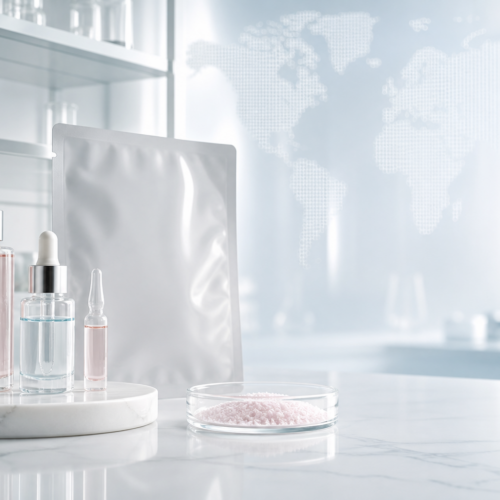
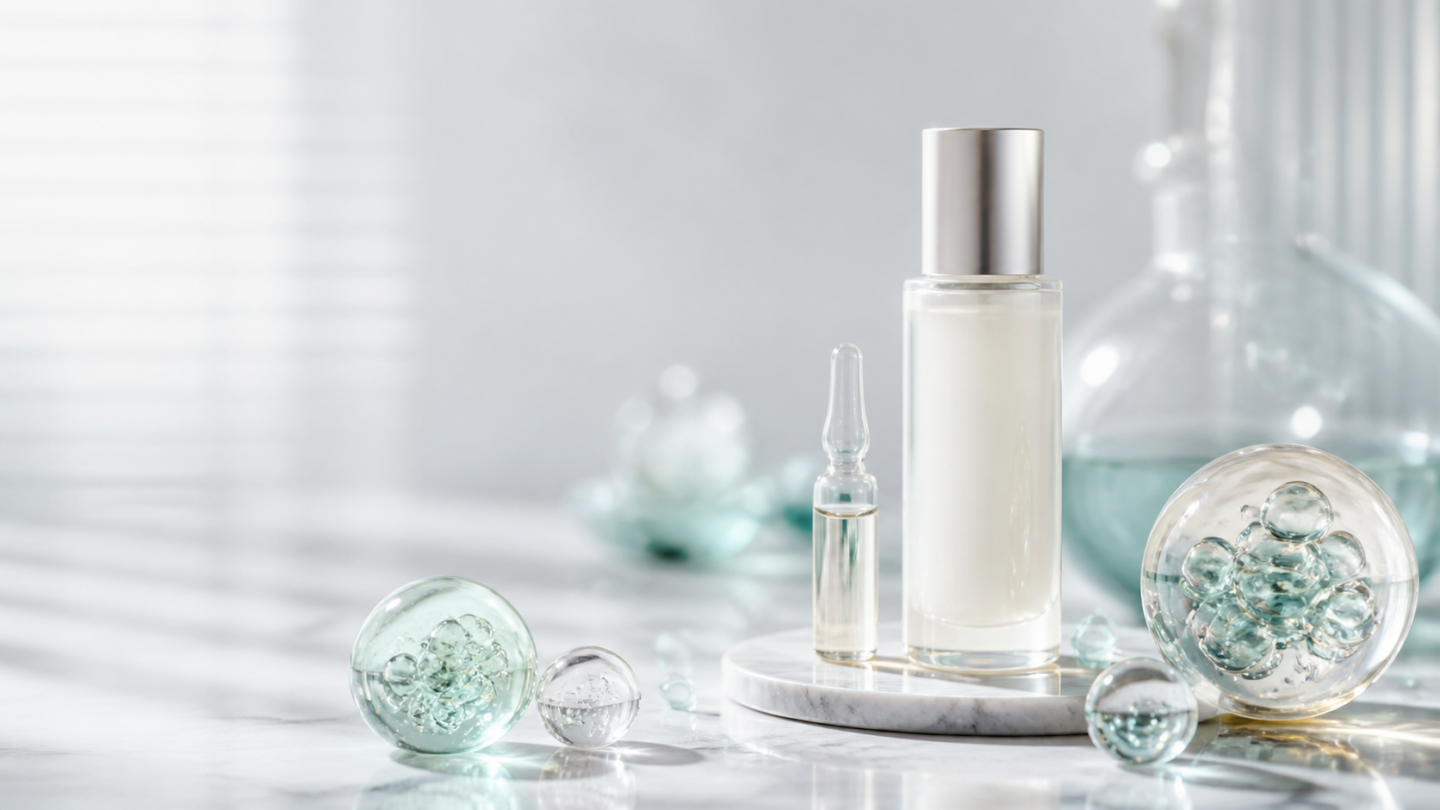
Original visual: a cosmetic biotech concept for exosome-skincare product-development discussion.
Exosomes are a subset of extracellular vesicles involved in cell-to-cell communication. In market language, “exosome skincare” can refer to several very different things: a product containing a biological extracellular-vesicle preparation, a plant-derived vesicle or extract, a biomimetic system, or a formula inspired by exosome science but without comparable materials.
Those distinctions cannot be collapsed into one consumer claim. A strong product-development brief should state:
For a brand, traceability is more valuable than vague “next-generation cell communication” language. It is the basis for responsible supplier qualification, safety assessment and consumer education.
The most useful current evidence is also a warning against overstatement. A July 2026 scoping review of topical exosomes for skin rejuvenation screened 2,394 articles and found 18 human studies. Ten studies used another delivery modality alongside exosomes; eight used topical application alone. The authors noted limited human evidence, heterogeneous commercial source descriptions and a need for standardisation. PubMed
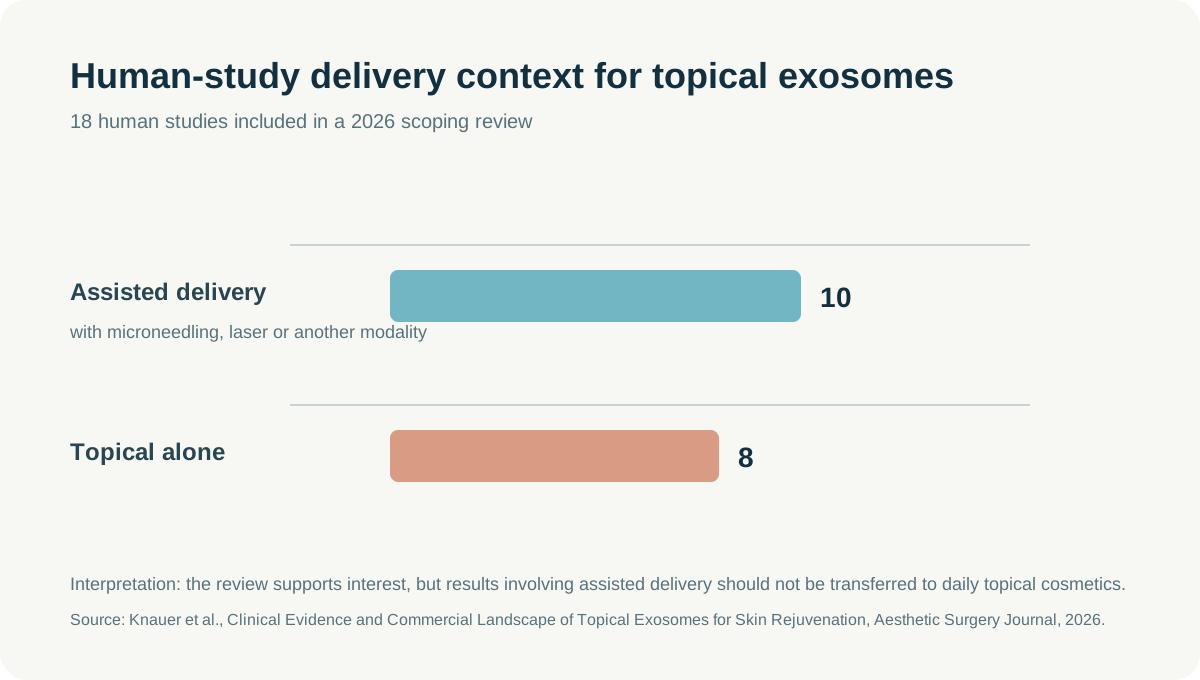
The implication is practical: a result from microneedling, fractional laser or injection cannot simply be copied onto a daily cosmetic serum used on intact skin. A second 2026 scoping review found encouraging results across 17 human dermatology studies, but also highlighted small samples, short follow-up, mixed designs and adverse events reported after injection. Journal of Drugs in Dermatology review
For cosmetic product copy, the appropriate standard is testing on the actual finished formula. Suitable territory includes visibly smoother-looking skin, hydration, comfort, radiance and improved appearance of texture. Disease treatment, wound healing, anti-inflammatory treatment, collagen-production promises and biological “regeneration” require a different evidentiary and regulatory analysis.
The premium position is clear in current direct-to-consumer retail. Plated Skin Science lists a 15 ml INTENSE serum at $258, a 30 ml DAILY serum at $258 and an EYE serum at $138. The brand describes its range as platelet-derived exosome serums. Plated Skin Science
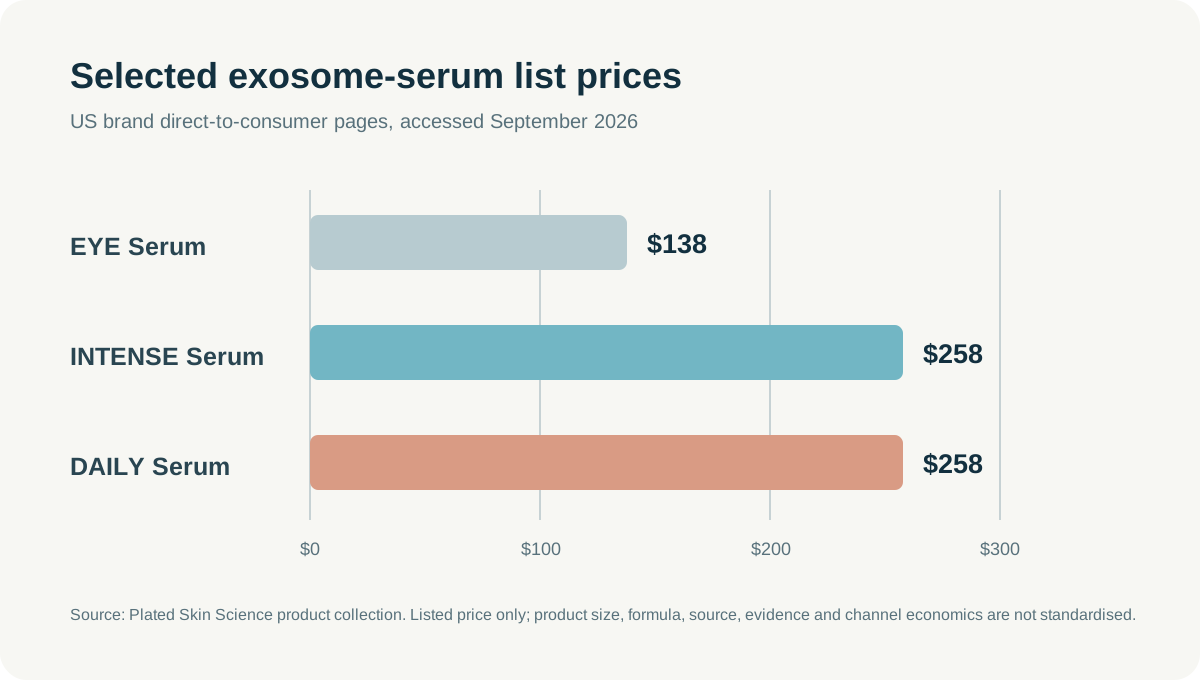
This price snapshot does not compare dose, source quality, product size, distribution margins, clinical evidence or sell-out. It does show that exosomes currently operate as a prestige technology cue. A new product needs a clear reason for its price: a better sensory experience, a traceable material story, compatible barrier-support actives, finished-product testing, airless packaging, or a well-designed routine system.
North America is the most visible prestige-DTC and clinic-adjacent opportunity. The strongest consumer product is a cosmetic leave-on serum or barrier-support night treatment that can be explained without procedure language. FDA’s position is especially relevant: exosome products intended to treat disease or affect body structure or function are drugs and biological products subject to premarket review and approval requirements. FDA
For a US topical cosmetic, avoid language such as “heals,” “repairs damaged tissue,” “regenerates cells,” “stimulates collagen production,” “treats inflammation,” “post-laser healing,” or any suggestion of injection equivalence. Plan MoCRA compliance and cosmetic claim substantiation from the start.
Europe is a credible premium market but should be approached as a safety-and-substantiation project. Under the EU Cosmetics Regulation, claims must not imply characteristics or functions a product does not have; the regulation also provides a safety, responsible-person and product-information framework. European Commission
The preferred format is a refined serum, gel-cream or recovery-style routine positioned around cosmetic appearance and comfort. Use the precise INCI and supplier documentation available; do not rely on a headline term that cannot be adequately described in the Product Information File. UK notification, responsible-person and claims requirements should be reviewed separately.
Korea and China are important reference markets for clinic-inspired textures, packaging and fast-moving ingredient storytelling. Their commercial relevance is visible in the wider “skin booster” and procedure-adjacent conversation. Yet overseas social content, local listings and procedure protocols should not be copied as substantiation for a product in the US or EU.
For an international brand, use these markets to develop elegant formats—ampoule-serums, hydrogel masks, airless creams and routine systems—while retaining market-specific safety review, registration checks and claim approval.
Japan is better suited to a quiet, sensitive-skin-conscious healthy-ageing proposition rather than a dramatic “regenerative” narrative. Southeast Asia calls for lightweight, heat-stable textures and digital education. In the Middle East, a premium airless night treatment or giftable serum-and-cream set may be appropriate. Latin America may respond more strongly to a lower-entry multi-benefit serum or mask. In every case, price architecture and local regulatory review matter as much as the trend itself.
The language around exosomes easily crosses from cosmetics into drug, biologic or medical-device territory. FDA’s safety alert states that there are currently no FDA-approved exosome products and notes that exosomes used to treat diseases or conditions are regulated as drugs and biological products. FDA
For a topical cosmetic launch, use this working distinction:
| Better cosmetic territory | Avoid without a separate regulatory and evidence basis |
|---|---|
| Helps skin look hydrated, smooth, radiant or refreshed | Regenerates cells, heals wounds or repairs tissue |
| Supports a comfortable-feeling, soft and supple finish | Treats inflammation, scars, acne, eczema or disease |
| A premium serum designed for visible skin-quality benefits | Equivalent to an injection, microneedling or laser treatment |
| Results supported by testing on the finished formula | “Clinically proven exosomes” without clear product-specific evidence |
In Europe, claims must comply with the cosmetic-product framework and common claim criteria. European Commission cosmetics legislation In North America, intended use and the totality of claims—not simply a product’s category label—are central to classification risk.
Exosome-led development should begin with due diligence, not a front-label claim. Before sampling, ask the supplier:
The 2026 commercial-landscape review specifically found minimal public information on isolation, processing and shelf life across the cosmetic products it assessed. That makes transparent supplier documentation a differentiation point, not a technical footnote. PubMed
| Product concept | Formula direction | Best-fit markets | Cosmetic story |
|---|---|---|---|
| Premium skin-quality serum | Traceable vesicle/exosome-positioned material, humectants, ectoin, panthenol | US, Canada, Europe, Middle East | Hydration, radiance and smoother-looking texture |
| Barrier-comfort night gel | Compatible lipids, ceramides, squalane, beta-glucan | Europe, Japan, Korea | Comfortable, replenished-looking skin overnight |
| Hydrogel recovery mask | Humectant system, soothing cosmetic ingredients, cold-feel texture | Korea, China, Southeast Asia | Fresh, hydrated and visibly rested-looking skin |
| Eye-area serum | Humectants, film-formers, selected cosmetic peptides | North America, Europe, Japan | A refreshed, smoother-looking eye area |
| Premium two-step routine | Serum plus barrier cream, airless packaging | Global prestige channels | A consistent, high-touch healthy-ageing ritual |
Do not use the maximum possible number of advanced actives as the development objective. The stronger route is a stable formula, an attractive texture, a clear skin-quality benefit and a test plan that matches the intended claim.
Brands can compare adjacent ingredient directions through the ZD Ingredient Library, Cosmetic Ingredients and OEM/ODM development service.
Exosome skincare is a real 2026 commercial signal, especially in prestige and clinic-adjacent beauty. But it is not a one-word shortcut to efficacy. The evidence base is still early, delivery methods are heterogeneous, public product disclosure is inconsistent and regulatory risk rises quickly when cosmetic language crosses into treatment or regeneration claims.
The strongest brand opportunity is a topical, well-specified and thoroughly tested cosmetic product. It should make a narrow promise that the finished formula can support—then use packaging, texture, ingredient transparency and a clear routine role to earn its premium position.
To explore a compliant exosome-adjacent or advanced-ingredient concept, share your target market, format, desired retail price and proposed claims with the ZD team. We can help define a cosmetic-first ingredient brief, packaging direction and OEM/ODM sampling route.
Evidence limitation: There is no unified public sell-out dataset for cosmetic exosome products across markets. Retail prices and product listings are channel signals, not market-share or sales estimates. Research involving injection, laser or microneedling is not evidence for a daily topical cosmetic product on intact skin.