ZD Skin Solution
Start Your Project
ZD Skin Solution
A source-backed global guide to PDRN skincare demand, regional product opportunities, formulation directions and cosmetic claims considerations in 2026.


PDRN has moved from a professional-treatment conversation into a visible skincare category. In 2026, the opportunity is no longer simply to add PDRN to another serum. Brands are using the ingredient story to build recovery serums, ampoules, hydrogel masks, eye products and healthy-ageing routines for different regional audiences.
This report reviews the strongest public signals from Korea, China, Japan, Southeast Asia, Europe and the UK, North America, the Middle East and Latin America. It combines retail measurement, retailer assortment, brand launches, search and social signals, industry reporting and regulatory sources. Where a public source does not provide PDRN sell-out data, the report labels the evidence as an assortment or trend proxy rather than a market-size estimate.
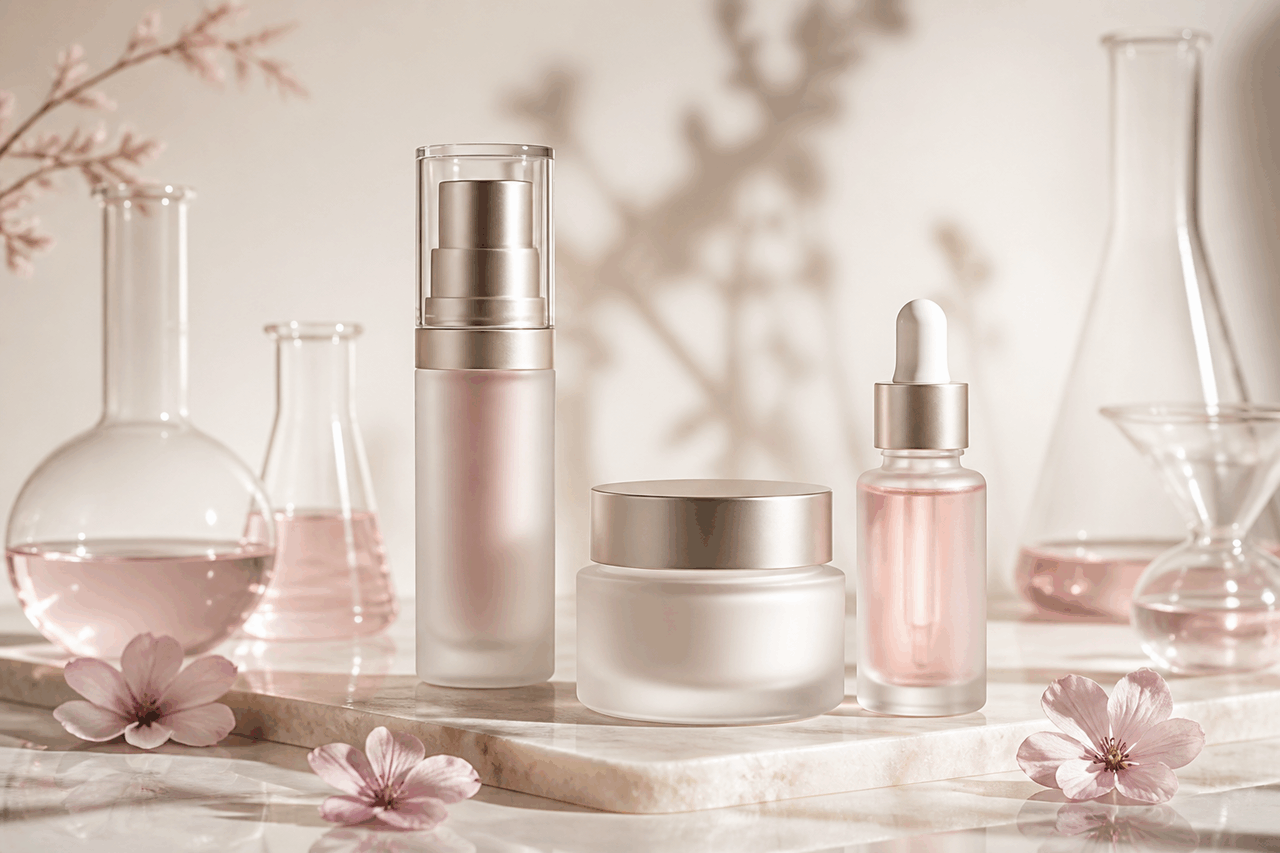
Editorial image: PDRN-inspired product development across global skincare markets.
PDRN, or polydeoxyribonucleotide, is a DNA-fragment ingredient used in cosmetic and professional-care conversations around hydration, skin comfort, recovery and healthy ageing. The term is often discussed alongside PN, salmon-derived materials and newer vegan or botanical-derived alternatives, but these terms should not be treated as automatically interchangeable.
For product development, the important questions are practical:
The consumer-facing story should stay simple. A PDRN product can be positioned around skin comfort, hydration, smoother-looking skin, barrier support or the appearance of recovery, provided the final claim language is supported and does not imply treatment of disease, injury or a medical condition.
PDRN is spreading through three connected systems.
First, Korean brands have made ingredient-led routines highly accessible. NIQ’s 2026 global K-beauty analysis identifies a 53% increase in K-beauty retail sales globally, with especially strong growth in Europe and Asia Pacific. The same report describes serums, ampoules, sheet masks and other Korean formats moving into everyday routines. NIQ
Second, retailers are converting the trend into shelf space. Sephora UK’s 2026 skincare forecast listed more than 170,000 TikTok posts for #pdrn at the time of publication, alongside other large skincare and longevity conversations. This is a social-interest signal, not a sales number, but it helps explain why PDRN is now easier for consumers to discover. Sephora UK
Third, large retail launches are testing whether the ingredient can travel beyond specialist audiences. Mediheal’s nationwide Ulta rollout and IOPE’s Sephora US launch show two different routes: an accessible, high-volume K-beauty assortment and a clinical-grade, treatment-inspired positioning. Mediheal, IOPE
Product direction: a concentrated recovery serum or ampoule for premium and professional-inspired routines.
Korea is the first market to examine when tracking PDRN product language, formats and ingredient combinations. Euromonitor’s 2026 South Korea skincare report recorded 2025 skincare retail value at KRW 7,653 billion, up 1% year over year, and specifically identifies ingredients such as PDRN as part of efficacy-focused skincare. Euromonitor summary
The Korean opportunity is strongest in:
For an OEM/ODM buyer, Korea is a useful benchmark for texture, packaging and ingredient storytelling. It should not be copied without adaptation: the same product may need a softer claim structure and different education in Europe or North America.
China matters both as a skincare market and as a source of cosmetic ingredients, packaging and finished-product manufacturing. Public marketplace observation across Tmall, JD.com, Douyin and Xiaohongshu shows PDRN-related products appearing in serums, freeze-dried powders, masks and post-procedure-inspired routines. These channels are useful for mapping price bands and product language, but marketplace assortment is not equivalent to national sales.
The strongest opportunity is a tiered product architecture:
Brands entering China should be especially careful with terms such as “regeneration,” “medical-grade,” “repair of damaged skin” and “post-treatment recovery.” Product claims, advertising content and ingredient documentation should be reviewed against the current NMPA framework before launch.
Japan is a more selective opportunity. PDRN can fit the market when it is translated into familiar needs: hydration, barrier support, smoothness and comfortable daily use. It is less likely to succeed as an aggressive, highly medicalised promise.
Recommended formats include:
The development brief should prioritise texture, packaging usability and mildness testing. Labels and claims should be checked against Japan’s pharmaceutical and cosmetics framework and the requirements of the intended channel.
Singapore, Thailand, Indonesia, Vietnam, Malaysia and the Philippines are important diffusion markets because Korean skincare already has strong visibility and social-commerce distribution. NIQ’s 2026 K-beauty analysis reports 27% year-over-year growth in Asia Pacific outside Korea and China, providing a useful regional context for the spread of Korean-led ingredient concepts. NIQ
The most suitable PDRN concepts are:
Product development should consider heat stability, shipping conditions, sweat-friendly textures and local language. The ASEAN Cosmetic Directive provides a harmonised regional reference, but notification, responsible-person and market-implementation requirements still need to be checked country by country. ASEAN Cosmetics Association
Product direction: a cooling hydrogel mask designed for high-frequency, social-commerce-friendly use.
Europe is a promising but evidence-sensitive market. NIQ reports that K-beauty value sales in Europe rose 58% year over year, with Korean brands representing around 10% of online skincare sales and a higher share in several leading markets. This is evidence of the channel’s openness to Korean innovation, not proof of PDRN-specific market share. NIQ
European product opportunities include:
The EU Cosmetics Regulation, ingredient restrictions, safety assessment and product information file requirements should shape the brief from the beginning. UK launches require their own review, including the UK product notification route. Brands should also avoid presenting a cosmetic PDRN product as an injectable, medical treatment or substitute for professional care. European Commission
The United States has become one of the most visible expansion markets for PDRN. Mediheal announced a PDRN collection rollout across more than 1,400 Ulta Beauty stores in February 2026. IOPE entered Sephora US with nine targeted products, including a PDRN collection, priced from $6.50 to $69. Mediheal, Amorepacific
This supports three product directions:
US claims should be supported by a suitable evidence plan, and responsible persons should understand whether the product remains a cosmetic under the intended representation. MoCRA also creates obligations around facility registration, product listing, safety records and serious adverse-event reporting, subject to applicable requirements and exemptions. FDA MoCRA
In Canada, manufacturers and importers must submit a Cosmetic Notification Form within 10 days after first sale. Health Canada also states that notification is not an approval of the product or its claims. Health Canada
The UAE, Saudi Arabia and neighbouring Gulf markets are selective but attractive for premium skincare. PDRN can fit a high-end routine when paired with deep hydration, elegant packaging and a clear professional-inspired story. The climate also supports products addressing dryness and moisture retention.
Recommended formats include:
Brands should validate local registration, import, language, halal or sourcing questions where relevant, and the requirements of the specific distributor or retailer. Product education should focus on cosmetic benefits and usage rather than medical promises.
Brazil, Mexico and Colombia are the most useful starting points for a Latin American PDRN test. Public retail and marketplace signals suggest that Korean skincare concepts are reaching consumers through Mercado Libre, Amazon, specialist beauty retail and social commerce. The challenge is not only awareness; it is explaining why the product deserves a premium over a familiar hydrating serum.
The best entry formats are likely to be:
Brazil requires particular attention to ANVISA’s cosmetics framework and company authorisation requirements. ANVISA
The chart below uses NIQ’s comparable K-beauty retail growth figures as a proxy for the distribution environment through which PDRN is travelling. It is not a PDRN sales chart.
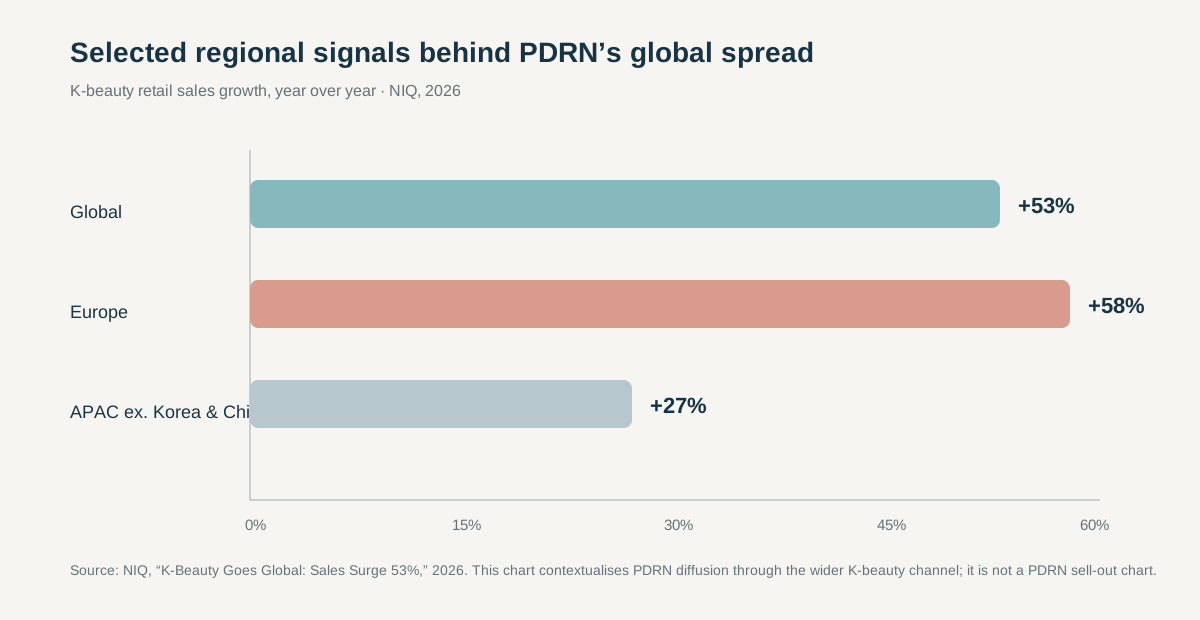
The implication is practical: PDRN brands should build for cross-border discovery, but adapt texture, claims, price and education for each market. A Korean product can become globally visible quickly, yet global visibility does not remove local compliance or product-market-fit requirements.
PDRN should be developed as part of a formula system, not as an isolated hero ingredient.
| Product direction | Supporting system | Best-fit regions | Primary cosmetic story |
|---|---|---|---|
| Recovery serum | PDRN, panthenol, ectoin, beta-glucan | Europe, US, Japan | Comfort and hydration |
| Peptide ampoule | PDRN, peptides, niacinamide, hyaluronic acid | Korea, US, China, Middle East | Smoother-looking, firmer-looking skin |
| Hydrogel mask | PDRN, allantoin, glycerin, soothing actives | Southeast Asia, China, Latin America | Fast hydration and fresh feel |
| Barrier gel-cream | PDRN, ceramides, squalane, fatty acids | Europe, Japan, Canada | Daily barrier support |
| Eye treatment | PDRN, peptides, caffeine, humectants | US, Korea, Europe | Hydration and smoother-looking eye area |
The right system depends on stability, raw material compatibility, target cost, packaging, claims and expected use frequency. More actives do not automatically create a stronger product; they can also increase cost, irritation risk and formulation complexity.
Product direction: a coordinated PDRN and peptide system for healthy-ageing positioning.
PDRN creates a high risk of overpromising because consumers may associate it with injectables or professional procedures. A cosmetic product should not imply that it treats wounds, inflammation, disease, scarring or a medical condition unless it is lawfully classified and supported under the relevant regulatory pathway.
Before approving copy or packaging, brands should prepare:
Useful cosmetic language may include “helps support the skin barrier,” “helps improve the appearance of dryness,” “leaves skin feeling more comfortable” or “helps skin look smoother.” The exact wording must be reviewed with the final formula, study design, market and advertising channel in mind.
For more preparation guidance, review the ZD Compliance Guide and ZD Ingredient Library.
The following score is a strategic assessment, not a forecast. It combines public evidence of consumer familiarity, retail or channel visibility, product-development fit and regulatory friction.
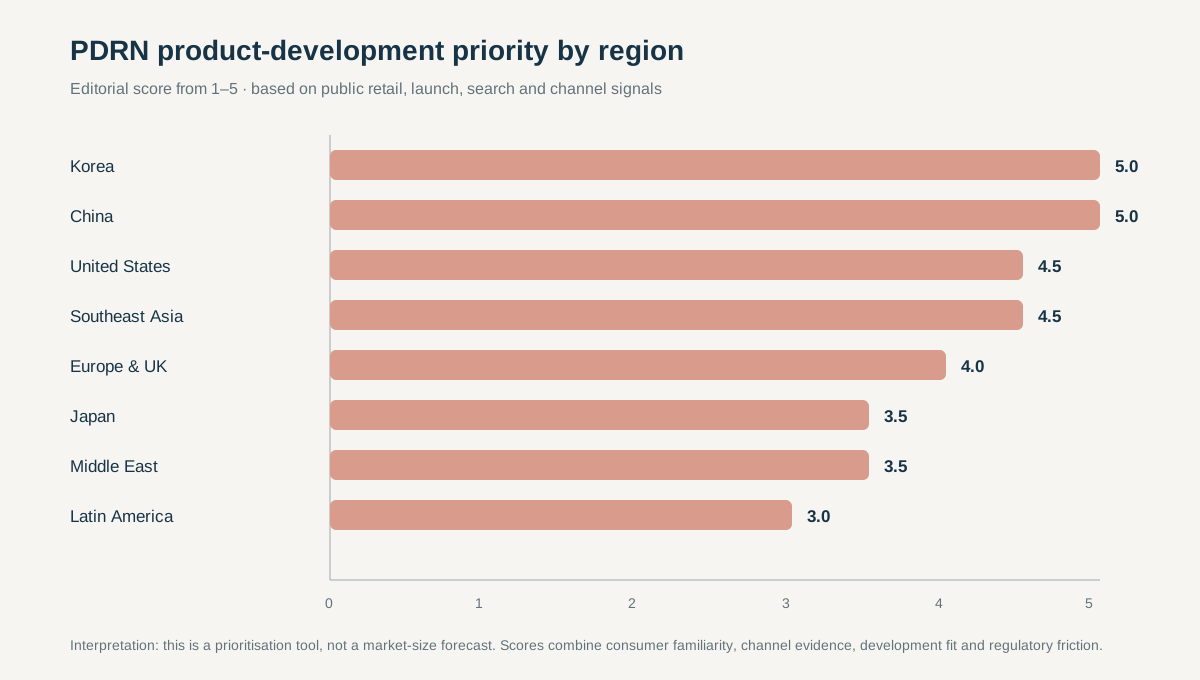
Korea and China are the best markets for learning the category and sourcing product inspiration. The United States and Southeast Asia are strong test markets for retail and social-commerce expansion. Europe, the UK, Japan and Canada offer durable opportunities when the product is supported by restrained claims and complete documentation. The Middle East and Latin America are attractive selective-entry markets where price, education and distributor execution matter.
For formula options and production routes, brands can compare Private Label Skincare Solutions, Bulk Skincare Formulations and Cosmetic Ingredients.
PDRN has enough public evidence to justify product-development attention, but not enough comparable global sell-out data to support a single worldwide market-size claim. The strongest opportunity is to translate the ingredient into a product system that consumers can understand and use repeatedly.
The practical priorities are:
PDRN can be a strong product-development platform when it is connected to a defined skin concern, a suitable texture and a credible evidence plan. It is much weaker when it is used as a substitute for those decisions.
Interested in developing a PDRN skincare product for a specific market? Share your target region, product format, price position and preferred claims with the ZD team. We can help evaluate ingredient systems, sampling options and a practical OEM/ODM development pathway.
Evidence limitation: Public sources do not provide a unified, comparable six-month PDRN sell-out dataset covering every region and channel. This report therefore separates direct sales or retail-measurement data from assortment, search, social and brand-launch signals. The regional priority score is an editorial decision-support tool, not a sales forecast.